About 301 minutes
Heart of Europe — Context and Discussion
Architecture
69,183 recorded words. 2 minutes difference from this book's estimate.
View Gutenberg source #56858
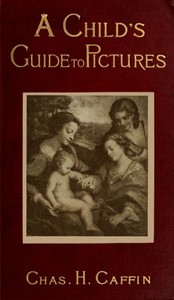
The source record for A Child's Guide to Pictures — Edition Insights measures this digital text at 68,664 words, 4 hr 59 min estimated reading time, and 7 detected text sections.
The text analysis averages about 22.7 words per sentence, while the detected sections provide another way to judge how the source is divided.
Project Gutenberg metadata also associates the work with “Natural history -- Juvenile literature,” connecting these edition facts with the source record’s subject description.
Explore this collection
These alternatives are selected using recorded categories and estimated reading time.
About 301 minutes
Architecture
69,183 recorded words. 2 minutes difference from this book's estimate.
View Gutenberg source #56858About 302 minutes
Architecture
69,327 recorded words. 3 minutes difference from this book's estimate.
View Gutenberg source #53850About 296 minutes
Architecture
67,971 recorded words. 3 minutes difference from this book's estimate.
View Gutenberg source #59746Search stored excerpts and compare books → Choose by your preferences →
Choices use stored catalog measurements. Estimates vary with reading speed. A shared category is a catalog label, not a claim that two books have the same argument or literary quality.
Search reads excerpt text stored with this catalog and links to its associated Gutenberg record. The connection is stored in the site database; this tool does not recheck that every excerpt is word-for-word identical to that external record. Excerpt search does not cover every chapter and does not verify historical publication dates.
Catalog snapshot checked: 2026-09-25. Coverage: 95 public books, 95 available source excerpts.
Read the complete public-domain text at its original source.
Read on Project GutenbergCharles H. Caffin opens A Child's Guide to Pictures by distinguishing his approach from the common practice of collecting photographs for history studies. He declares that the subject of a picture has “very little to do with its beauty as a work of art,” setting the stage for a systematic exploration of formal qualities. The book is structured as a series of chapters that progress from basic concepts like “The Feeling for Beauty” to advanced topics such as “Brush-work and Drawing” and “Subject, Motive, and Point of View.” Each chapter introduces a principle—contrast, geometric composition, naturalistic composition—and illustrates it with specific paintings reproduced in the volume.
Caffin carefully distinguishes between the “Classic formula” and the “Academic formula.” The Classic formula, he explains, is a rule for building formal compositions, often strengthened by classic architecture or legend. The Academic formula, taught in schools like the Paris Academy, adapts this classic basis but may apply it to modern subjects. He uses Raphael’s Jurisprudence as an example of the Classic-Academic manner, noting that a modern artist painting in that style can be called Academic, Classic, or Idealistic. However, he warns that these terms are not always synonymous: an Academic painter may choose an everyday subject yet still miss natural truth by trying to improve on facts or omitting light and atmosphere.
Caffin’s critique of Leutze’s Washington Crossing the Delaware is a key demonstration of his method. He points out that the Düsseldorf School, where Leutze trained, abandoned classical subjects for history and genre scenes but treated them artificially, “as if they were taking part in some scene in an opera.” He questions the historical accuracy of the painting, noting that the crossing began in the evening and lasted until early morning, yet the picture shows no dimness or gloom of night. More fundamentally, he argues that no natural light is suggested: outlines are sharp, figures equally distinct, and the ice, though studied for surface gleam, does not represent real ice seen in real light.
Throughout the excerpts, Caffin returns to the concepts of light and atmosphere as central to judging naturalism. In discussing Leutze, he states that the Düsseldorf School “paid no attention to the real appearances of light.” Later, in the chapter on color, he promises to address “Color—Values—Subtlety” and “Color—Texture, Atmosphere, Tone.” This recurring emphasis suggests that for Caffin, the successful rendering of light is what separates naturalistic from academic or idealistic work. The book’s structure moves from simple formal elements (contrast, geometric composition) to the more elusive qualities of atmosphere and tone, building a vocabulary for young readers to articulate what they see.
Caffin’s examples shift between large historical canvases (Leutze), intimate genre scenes (Vermeer’s Young Woman Opening a Window), and landscapes (Corot, Turner). This variety trains the reader to apply the same analytical tools across different scales and subjects. In the chapter on “The Action, Movement, and Composition of the Figure,” he likely extends the discussion from static composition to dynamic arrangement. The table of contents shows a deliberate progression: after establishing geometric and naturalistic composition, he moves to form and color, then to brushwork and drawing, and finally to subject and point of view. This sequence mirrors a pedagogical journey from the skeleton of a picture to its surface and meaning.
Caffin’s guide is best read with the illustrations at hand, as his arguments depend on visual evidence. Readers may find it useful to compare his analysis of a painting like Washington Crossing the Delaware with their own observations, testing whether they can detect the artificiality he describes. The book’s value lies not in its judgments but in the framework it provides for looking—a set of questions about composition, light, and intention that remain relevant for any viewer.
I keep thinking about that old guide, how it taught children to find the story in brushstrokes and light rather than the easy story of the people in the frame. It made me remember this other, gentler book on angels, which lingers the same quiet way. Angels in Art — Key Ideas to Explore feels like holding a small, warm lamp to those same tender details.
Your answers remain private and are stored only in this browser.









