
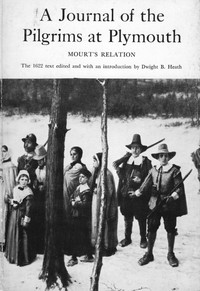
A Journal of the Pilgrims at Plymouth; Mourt's Relation: A Relation or Journal…
This isn't a novel with a traditional plot. It's a collection of journals and letters written between 1620 and 1621 by William Bradford, Edward Winslow, and others actually on the ground. The book starts with the Mayflower's arrival at Cape Cod, the frantic search for a settlement site, and the backbreaking work of building Plymouth in the dead of winter. Half the colonists don't survive that first season. The narrative then follows their first contacts—sometimes tense, sometimes hopeful—with the Wampanoag people, including the pivotal alliance with Tisquantum (Squanto) and the leader Massasoit. It culminates in the description of the 1621 harvest feast, the event we now call the first Thanksgiving.
Why You Should Read It
You should read this to scrub away the glossy myth. Here, the Pilgrims aren't statues; they're scared, cold, and arguing about where to build a fort. Winslow's description of Massasoit's first visit to Plymouth is incredibly tense and detailed—you can feel the mutual caution. The journal doesn't shy away from their hardships or their reliance on Native knowledge for survival. It gives you the facts without modern commentary, which is both its power and its challenge. You have to read between the lines, which makes you an active participant in the history.
Final Verdict
Perfect for anyone who loves primary sources and wants to hear history from the people who lived it. It's essential for early American history fans, but also great for curious readers tired of textbook summaries. Be warned: the language is 17th-century, so it takes a minute to get into the rhythm. But once you do, it's utterly captivating. This is the real, unvarnished starting point of the story.
Legal analysis indicates this work is in the public domain. It serves as a testament to our shared literary heritage.
Susan Johnson
2 years agoThe digital index is well-organized, making research much faster.
Ashley Davis
10 months agoIf you're tired of surface-level information, the logic behind each conclusion is easy to follow and verify. I am looking forward to the author's next publication.
Patricia Rodriguez
1 year agoComprehensive and well-researched.
Emma Lopez
6 months agoFinally found time to read this!



James Gonzalez
9 months agoFrom a researcher's perspective, the structural organization allows for quick referencing of key points. Finally, a source that prioritizes accuracy over hype.