
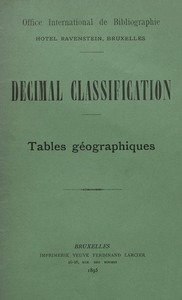
Decimal Classification. Tables géographiques
Let's be clear from the start: this is not a novel. You won't find characters or a plot twist. 'Decimal Classification. Tables géographiques' is a reference manual, a key part of the Dewey Decimal System's grand plan. Published by the International Institute of Bibliography, it's a giant list. Its job is to assign a unique number to every geographical location on Earth, so librarians anywhere could file a book about Paris or the Himalayas in the exact same spot.
The Story
There's no traditional narrative. The 'story' is the monumental task itself. The book presents tables where continents, countries, regions, and cities are all broken down into decimal numbers. It represents a huge, global effort to create a universal language for organizing information. Think of it as the early, printed version of a geographic database, built entirely on paper and human consensus.
Why You Should Read It
It sounds dry, but it's a piece of intellectual history. Flipping through it, you see the world as it was categorized over a century ago. You get a sense of the optimism of that era—the belief that system and order could tame the overwhelming flood of published material. It's a physical artifact of a pre-digital dream of perfect organization.
Final Verdict
This is a niche pick, but a rewarding one. It's perfect for history buffs fascinated by how we manage information, librarians curious about their field's roots, or anyone who enjoys odd, primary-source glimpses into the past. Don't read it cover-to-cover. Dip into it, ponder a page, and appreciate the sheer audacity of the project.
You are viewing a work that belongs to the global public domain. Feel free to use it for personal or commercial purposes.
Nancy Martinez
1 year agoIf you enjoy this genre, the atmosphere created is totally immersive. Absolutely essential reading.
Ava Smith
1 year agoRecommended.
Lisa Williams
1 month agoHonestly, the clarity of the writing makes this accessible. Definitely a 5-star read.
Nancy Moore
1 year agoAs someone who reads a lot, it challenges the reader's perspective in an intellectual way. Worth every second.
Patricia Nguyen
2 years agoThis book was worth my time since it manages to explain difficult concepts in plain English. I learned so much from this.