About 160 minutes
Colour Decoration of Architecture — Inside the Classic
Architecture
36,748 recorded words. 0 minutes difference from this book's estimate.
View Gutenberg source #58840
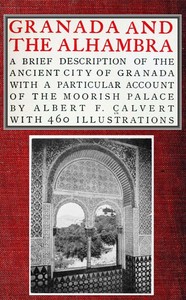
This digital edition of Granada and the Alhambra A brief description of the ancient city of Granada, with a particular account of the Moorish palace — Inside the Classic is described by source-level measurements including 36,596 words, 2 hr 40 min estimated reading time, and 11 detected text sections.
The text analysis averages about 24.2 words per sentence, while the detected sections provide another way to judge how the source is divided.
Project Gutenberg metadata also associates the work with “Alhambra (Granada, Spain),” connecting these edition facts with the source record’s subject description.
Explore this collection
These alternatives are selected using recorded categories and estimated reading time.
About 160 minutes
Architecture
36,748 recorded words. 0 minutes difference from this book's estimate.
View Gutenberg source #58840About 162 minutes
Architecture
37,110 recorded words. 2 minutes difference from this book's estimate.
View Gutenberg source #65462About 163 minutes
Architecture
37,398 recorded words. 3 minutes difference from this book's estimate.
View Gutenberg source #18653Search stored excerpts and compare books → Choose by your preferences →
Choices use stored catalog measurements. Estimates vary with reading speed. A shared category is a catalog label, not a claim that two books have the same argument or literary quality.
Search reads excerpt text stored with this catalog and links to its associated Gutenberg record. The connection is stored in the site database; this tool does not recheck that every excerpt is word-for-word identical to that external record. Excerpt search does not cover every chapter and does not verify historical publication dates.
Catalog snapshot checked: 2026-09-25. Coverage: 95 public books, 95 available source excerpts.
Read the complete public-domain text at its original source.
Read on Project GutenbergAlbert F. Calvert's Granada and the Alhambra (1907) is structured as a sequential tour, moving from the outer gates and towers inward to the palace interiors. The author guides the reader through a series of architectural set-pieces, each introduced by its name and historical associations. This editorial note focuses on how Calvert uses movement between scenes—from the Torre de los Siete Suelos to the Torre de las Infantas—and recurring motifs such as fountains, inscriptions, and the interplay of light and shadow to create a vivid, almost cinematic experience of the Alhambra.
Calvert's narrative proceeds methodically from one tower to the next, each described with a consistent formula: name, location, architectural features, and historical or legendary associations. For instance, the Torre de los Siete Suelos is noted for its seven underground storeys and the story of Boabdil's exile, while the Torre de las Infantas is praised as "a perfect model of the smaller Oriental dwelling-house." This repetitive structure mirrors the experience of a visitor walking the enceinte, pausing at each landmark. The author also includes details of gates, such as the Pilar de Carlos V., a fountain "ornamented with the Imperial arms," which serves as a transition between the Moorish and Christian periods.
Throughout the excerpts, fountains appear as focal points: the Pilar de Carlos V., the fountain in the patio of the Torre de las Infantas, and the implied water features of the Alhambra's gardens. Calvert frequently notes inscriptions, such as those in the Torre de la Cautiva that "resound the praises of Abu-l-Hejaj." Light and shadow are evoked indirectly through descriptions of "beautifully moulded twin windows" and "richly decorated belvedere." These recurring elements create a sensory texture that goes beyond mere architectural cataloguing, inviting the reader to imagine the play of light on stucco and tile.
Calvert's guide is not confined to the Nasrid period; it frequently contrasts Moorish structures with later Spanish additions. The Palace of Charles V. is described as "forlorn, roofless" and "so out of place amid these Oriental buildings." The parish church of Santa Maria, built on the site of the Great Mosque, is noted for its "Visigothic inscription" but otherwise deemed unremarkable. This juxtaposition underscores the historical layering of the site, and Calvert's movement between eras—from Moorish to Christian—mirrors the physical journey through the Alhambra's complex.
Calvert peppers his architectural descriptions with local legends, adding a narrative dimension to the guide. The Torre de los Siete Suelos is associated with "phantom guards and enchanted sentries" and buried treasure. The Torre de la Cautiva's name is ironically contrasted with its inscriptions praising a lion, not a captive. These anecdotes, though brief, transform the towers from mere structures into sites of story. The author's willingness to include such fables—while maintaining a factual tone—reflects the guide's dual purpose as both a practical souvenir and a evocation of the Alhambra's romantic allure.
Readers approaching Calvert's guide will find it most useful as a companion to a physical visit or as a structured armchair tour. The author's methodical progression from gate to tower, his attention to recurring motifs, and his integration of legend and history offer a coherent framework for understanding the Alhambra's architecture. By following the sequence of scenes, one can reconstruct the experience of an early twentieth-century traveller, moving through the palace with Calvert as a knowledgeable, if occasionally opinionated, guide.
I finished that Granada guide and found myself thinking about how places hold stories we can't hear unless we slow down—the way it wanders from tower to courtyard. It reminded me of paging through The great painters' gospel — Reading Companion last winter, that same quiet feeling of someone old whispering history into your ear.
Build a private reading journal entry for this title.









