
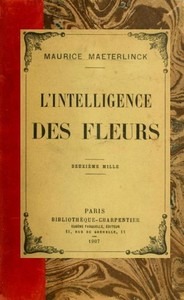
L'intelligence des fleurs by Maurice Maeterlinck
Published in 1907, L'intelligence des fleurs (The Intelligence of Flowers) isn't a novel with a plot in the traditional sense. Instead, think of it as a series of brilliant, connected observations. Maeterlinck takes us on a walk through nature, stopping to examine the common flowers we often overlook. With the eye of a poet and the curiosity of a scientist, he dissects their lives.
The Story
There's no main character except life itself. The "story" is the revelation of how flowers overcome immense obstacles. They can't move, so how do they find mates and spread their seeds? Maeterlinck details their astonishing inventions: the catapult mechanisms of violets, the calculated warmth of the arum lily to attract flies, the precise engineering of pollen delivery. He frames each adaptation not as a random accident, but as a purposeful, intelligent solution to a life-or-death problem. The book builds a compelling case, example by beautiful example, for seeing the vegetable world as something far more aware and ingenious than we ever imagined.
Why You Should Read It
This book is a quiet masterpiece of perspective. Maeterlinck's writing is clear, vivid, and filled with genuine wonder. It doesn't preach; it points. Reading it feels like having a brilliant, gentle friend show you secret marvels in your own backyard. It bridges the gap between science and poetry perfectly, making complex biology feel like a thrilling discovery. You'll never look at a weed pushing through a crack in the pavement the same way again—you'll see it as a triumphant strategist.
Final Verdict
Perfect for curious minds, gardeners, poets, and anyone who feels a bit disconnected from the natural world. If you enjoyed the awe of The Hidden Life of Trees or the lyrical science of Robin Wall Kimmerer, this is your philosophical and beautiful ancestor. It's a short, potent read that offers a profound sense of connection and a lasting dose of wonder.
This title is part of the public domain archive. Share knowledge freely with the world.
Thomas Harris
1 year agoAfter finishing this book, the atmosphere created is totally immersive. A valuable addition to my collection.
Emma Brown
1 year agoI had low expectations initially, however it manages to explain difficult concepts in plain English. Absolutely essential reading.
Oliver Wright
7 months agoHaving read this twice, the flow of the text seems very fluid. Thanks for sharing this review.
Margaret Harris
9 months agoI stumbled upon this title and the storytelling feels authentic and emotionally grounded. One of the best books I've read this year.




Oliver Wilson
4 months agoText is crisp, making it easy to focus.