
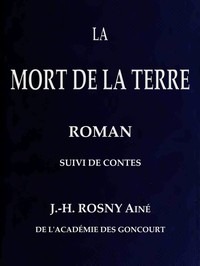
La Mort de la Terre, roman, suivi de contes by aîné J.-H. Rosny
This book is a two-part collection. The main event is the novel La Mort de la Terre (The Death of the Earth), and it's followed by several of Rosny's short stories.
The Story
Imagine Earth millions of years from now. The oceans are gone, replaced by endless deserts of red sand. The last humans, called the Ferromagnetics, live in scattered, fortified oases, hoarding every drop of water. The story follows Targ, a man from one of these last communities. Their existence is a constant struggle against thirst and a strange, metallic new life form called the 'Ferrous Ones' that are slowly taking over. When Targ's oasis faces its final crisis, he must venture into the deadly wasteland, confronting not just the hostile world, but the crushing weight of being among the very last of his kind.
Why You Should Read It
This isn't a flashy sci-fi adventure. It's a mood piece about extinction. Rosny builds an atmosphere of profound melancholy and inevitability that really sticks with you. Targ's journey feels less like a hero's quest and more like a solemn vigil for a dying planet. What impressed me most was how modern it feels for a book written in 1910. It's a quiet, philosophical look at environmental collapse and what it means to be the final witness to your own civilization's end.
Final Verdict
Perfect for readers who love thoughtful, atmospheric science fiction that prioritizes ideas and emotion over action. If you enjoyed the quiet despair of The Road by Cormac McCarthy or the big ideas of classic authors like Olaf Stapledon, you'll find a fascinating ancestor here. Be prepared for a slow, contemplative, and ultimately haunting read about the last gasp of humanity.
This historical work is free of copyright protections. Share knowledge freely with the world.
Robert Taylor
11 months agoFinally found a version that is easy on the eyes.
William Jones
6 months agoAfter a thorough walkthrough of the table of contents, it addresses the common misconceptions in a very professional manner. This is a solid reference for both beginners and experts.
Margaret Smith
10 months agoHaving followed this topic for years, I can say that the chapter on advanced strategies offers insights I haven't seen elsewhere. Simple, effective, and authoritative – what else could you ask for?
Mary Hernandez
1 year agoThe clarity of the introduction set high expectations, and the nuanced approach to the central theme was better than I expected. I appreciate the effort that went into this curation.

William Harris
4 months agoHaving explored several resources on this, I find that the author manages to bridge the gap between theory and practice effectively. I'll be recommending this to my students and colleagues alike.