
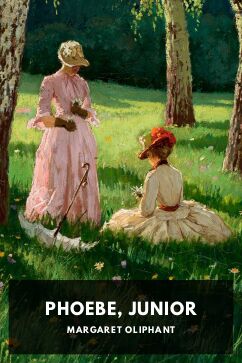
Phoebe, Junior - Margaret Oliphant
Margaret Oliphant's Phoebe, Junior might have been published in 1876, but its central dilemma is timeless. What happens when the world you're prepared for isn't the one you have to live in?
The Story
Phoebe Beecham is the well-educated, clever daughter of a London clergyman. Her family has social aspirations but shaky finances. To help out, Phoebe is sent to stay with her grandparents, Mr. and Mrs. Tozer, in the quiet town of Carlingford. The Tozers are respectable, but they're tradespeople—a world away from the genteel society Phoebe knows. Phoebe finds herself stuck between these two worlds. She's too refined for her grandparents' circle, but her connection to them makes her questionable in the eyes of Carlingford's "better" families. The plot thickens with a potential romantic interest, family financial worries, and Phoebe's own struggle to use her intelligence and charm without overstepping the strict boundaries placed on Victorian women.
Why You Should Read It
Don't let the Victorian setting fool you. Phoebe is a fantastic character. She's observant, witty, and frustrated by the limitations around her. Oliphant writes her with such clear-eyed realism—she's neither a perfect angel nor a rebellious firebrand, but a believable young woman trying to make the best of a difficult situation. The book is a sharp, often funny, look at the snobbery and social climbing of small-town life. It asks big questions about money, status, and personal worth that still resonate. Is your value determined by your family name, your bank account, or your own character?
Final Verdict
This book is perfect for anyone who loves classic literature with a strong, relatable heroine. If you enjoy the social dramas of Jane Austen or Elizabeth Gaskell, you'll find a kindred spirit in Margaret Oliphant. It's also a great pick for readers curious about the Victorian era from a woman's perspective, written without the heavy, dusty prose some classics have. Phoebe, Junior is a quiet, character-driven novel that proves some struggles—belonging, family pressure, finding your place—are truly universal.
You are viewing a work that belongs to the global public domain. Preserving history for future generations.
Sandra Jackson
1 year agoThis book was worth my time since it manages to explain difficult concepts in plain English. Highly recommended.
Joshua Ramirez
1 year agoTo be perfectly clear, the pacing is just right, keeping you engaged. I couldn't put it down.





Thomas Flores
1 year agoAmazing book.