
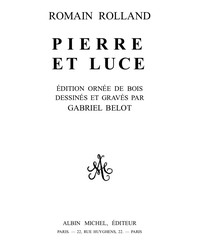
Pierre et Luce by Romain Rolland
Romain Rolland's Pierre et Luce is a short, powerful novel that feels like holding a perfect, delicate glass sphere—you're afraid any sudden movement might shatter it. Set in the grim winter and spring of 1918, it captures a specific, aching moment in history through the lens of a very private love.
The Story
Pierre Aubier is nineteen, brooding, and waiting for his call-up papers to fight in the trenches of World War I. Wandering through Paris one day, he meets Luce, a young, radiant sculptor. From their first conversation, they click. She represents art, life, and freedom—everything the war is trying to destroy. They begin a secret, hurried courtship, stealing afternoons in museums and along the Seine, building a sanctuary of their own. Their love is their rebellion against the madness around them. But the war is an inescapable presence. Every moment of joy is haunted by the knowledge that Pierre's departure for the front is inevitable. The story follows their desperate attempt to live a lifetime of love in the few weeks they might have left.
Why You Should Read It
This book wrecked me in the best way. Rolland doesn't waste a word. The prose is clear and direct, which makes the emotional punches land even harder. What I loved most was how he shows the war not through battle scenes, but through its effect on daily life and the human spirit. The anxiety isn't loud; it's a constant, low hum in the background of every tender scene. Pierre and Luce feel incredibly real—they're naive, passionate, and painfully young, trying to be adults in a world that's robbing them of their future. Their love story is less about grand passion and more about two people recognizing a kindred soul just as everything is about to be torn apart. It's a profound meditation on how we find meaning and beauty even when facing the abyss.
Final Verdict
This is a perfect book for readers who love historical fiction that focuses on intimate human stories rather than grand politics. If you enjoyed the emotional tension of All Quiet on the Western Front but from the home front, or the bittersweet romance of Corelli's Mandolin, you'll connect with this. It's also a great, manageable classic for someone who wants to explore early 20th-century literature without committing to a huge tome. Fair warning: it's sad. But it's the kind of sad that feels important and true, a beautiful, fleeting reminder of what was lost. Don't expect a happy ending—expect a memorable and haunting one.
There are no legal restrictions on this material. Enjoy reading and sharing without restrictions.
Noah Johnson
1 year agoHaving read this twice, the arguments are well-supported by credible references. One of the best books I've read this year.
Ashley Davis
5 months agoAs someone who reads a lot, the narrative structure is incredibly compelling. One of the best books I've read this year.
Kimberly Walker
8 months agoFrom the very first page, the content flows smoothly from one chapter to the next. This story will stay with me.
Thomas Flores
2 years agoHonestly, the narrative structure is incredibly compelling. Thanks for sharing this review.


Matthew Davis
1 year agoI started reading out of curiosity and the emotional weight of the story is balanced perfectly. I couldn't put it down.