About 134 minutes
Angels in Art — Key Ideas to Explore
Architecture
30,666 recorded words. 8 minutes difference from this book's estimate.
View Gutenberg source #61896
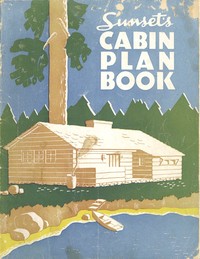
Sunset's Cabin Plan Book — Text and Context can be approached with a clearer sense of reading commitment from its source measurements: 28,808 words, 2 hr 6 min estimated reading time, and 5 detected text sections.
The text analysis averages about 20.1 words per sentence, while the detected sections provide another way to judge how the source is divided.
Project Gutenberg metadata also associates the work with “Buildings,” connecting these edition facts with the source record’s subject description.
Explore this collection
These alternatives are selected using recorded categories and estimated reading time.
About 134 minutes
Architecture
30,666 recorded words. 8 minutes difference from this book's estimate.
View Gutenberg source #61896About 113 minutes
Architecture
25,986 recorded words. 13 minutes difference from this book's estimate.
View Gutenberg source #26354About 113 minutes
Architecture
25,958 recorded words. 13 minutes difference from this book's estimate.
View Gutenberg source #62431Search stored excerpts and compare books → Choose by your preferences →
Choices use stored catalog measurements. Estimates vary with reading speed. A shared category is a catalog label, not a claim that two books have the same argument or literary quality.
Search reads excerpt text stored with this catalog and links to its associated Gutenberg record. The connection is stored in the site database; this tool does not recheck that every excerpt is word-for-word identical to that external record. Excerpt search does not cover every chapter and does not verify historical publication dates.
Catalog snapshot checked: 2026-09-25. Coverage: 95 public books, 95 available source excerpts.
Read the complete public-domain text at its original source.
Read on Project GutenbergSunset's Cabin Plan Book, edited by Ralph P. Dillon and published in 1918, addresses the Westerner's desire for a “vacation home” with a collection of cabin plans and practical lore. The foreword immediately establishes a conversational tone, using phrases like “talking stage” and “active discomfort” to frame the book as a guide for dreamers and builders alike. The editors prioritize flexibility over rigidity, emphasizing that plans are “suggestions around which you and your architect or contractor-builder can create a cabin to fill your own needs.” This editorial note examines the authorial choices in diction, dialogue, and description that shape the book's voice and utility.
The book's diction consistently blends friendly advice with authoritative instruction. The foreword opens with an exclamatory “Every Westerner wants a ‘vacation home’!”—a rhetorical hook that assumes shared values. Later, the text warns that “crowding may be jolly for a few hours or possibly for one night, but seldom longer than that,” using understatement to underscore practicality. The phrase “don’t ruin the picture by sticking a metal stovepipe through the roof” exemplifies a direct, almost chiding tone that treats the reader as a collaborator. This voice is sustained throughout, with imperatives like “Note that” and “consider” guiding the reader’s attention. The editors avoid technical jargon, favoring accessible terms such as “bevel siding,” “board and batten,” and “tongue-and-grooved Oregon pine,” which ground the advice in tangible materials.
The descriptions of individual cabins are concise yet evocative, focusing on spatial arrangements and material possibilities. For instance, a week-end cabin in the redwoods is praised for its “regular, unbroken walls,” which make it “a fairly easy job to build out of real logs.” The text highlights specific features: a “big fireplace, built on rugged lines” and a “second stone chimney serves the kitchen.” These details are functional, not ornamental. The description of a guest cabin built from “common, ordinary railroad ties” is notable for its matter-of-fact tone: “This is not such a far-fetched idea, either, because many railroads are willing to sell used ties.” The editors avoid hyperbole, instead offering concrete observations about labor savings and material availability. This descriptive economy mirrors the book's purpose: to inform rather than impress.
A recurring theme is the adaptability of plans to different contexts. The foreword states that “floor plans embody features that may be shifted from one to another,” and the same plan can be used for “a shingle house or one of board and batten.” This flexibility extends to cost considerations: “Cost estimates have been omitted purposely, as there are so many factors affecting the price of materials, labor, and transportation in various localities.” The text repeatedly emphasizes that “no two are exactly alike,” positioning the book as a source of inspiration rather than a rigid blueprint. In the description of a cabin accommodating eleven people, the text notes that “curtains or screens give the necessary privacy,” suggesting low-cost solutions. This structural flexibility reflects an authorial choice to empower the reader as a decision-maker.
The book frequently anticipates the reader's questions and concerns, creating an implied dialogue. For example, after describing a guest cabin without a kitchen, the text adds: “However, it is a gracious gesture—and one that will be appreciated—to provide a single-burner oil stove or an electric plate.” This parenthetical advice acknowledges potential objections. Similarly, the foreword addresses the “talking stage” directly, implying that many readers are still planning. The use of “you” throughout—as in “you should consider the number in the family”—personalizes the guidance. The editors also include specific examples, such as “John Rattray, of Marysville, built the original of this cabin at Lake Madrone,” grounding the advice in real-world application. This conversational approach transforms the book into a trusted advisor rather than a dry manual.
Sunset's Cabin Plan Book succeeds by treating its readers as capable amateurs who need practical, flexible advice rather than rigid instructions. The editors' choices in diction—direct, conversational, and occasionally wry—create a voice that is both authoritative and approachable. The descriptions prioritize function over flourish, while the structural flexibility encourages adaptation. For those interested in early 20th-century domestic architecture or the cultural history of Western vacation homes, this book offers a window into the values and priorities of its time, filtered through the lens of practical building lore.
I’ve often thought that Sunset's Cabin Plan Book — Text and Context holds a warmth like an old photograph, its diction so deliberate it hums. It reminds me of The French Impressionists (1860-1900) — Reading Companion, where light, not plot, carries the feeling. Both whisper about choosing one perfect stroke over many, leaving a quiet knowing between the lines.
Answer a few questions and save a private reflection on this device.









