M
Mark Matzeldelaflor
Guest
- Thread Author
- #1
Eastern red cedar, commonly called the red cedar, eastern juniper, pencil cedar, and red juniper, is a species of dense, slow-growing conifers that belong to the genus Juniperus of the family Cupressaceae. Known for its graceful appearance and being incredibly strong for its small to medium size, the red cedar is found in the eastern and northern states of America. The two varieties of eastern red cedar include Juniperus virginiana var. virginiana or eastern juniper (distinguished by larger cones, acute scale leaves at the apex, and reddish brown bark) and Juniperus virginiana var. silicicola or southern juniper (characterized by smaller cones, blunt scale leaves at the apex, and orange-brown bark).
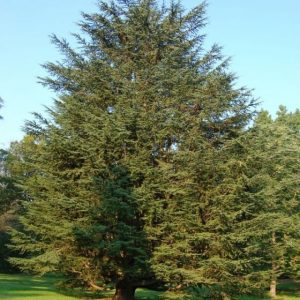
Eastern Red Cedar
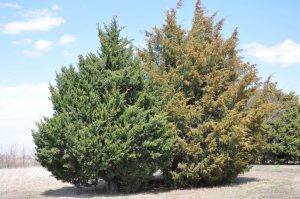
Eastern Red Cedar Tree
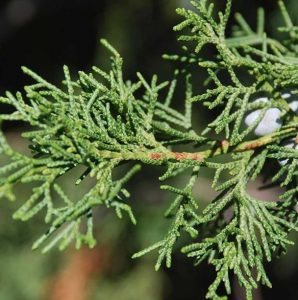
Eastern Red Cedar Leaf
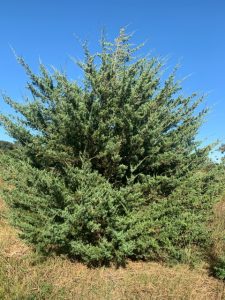
Eastern Red Cedar Juniper
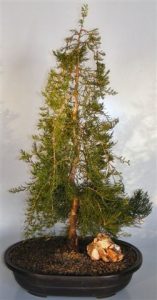
Eastern Red Cedar Bonsai
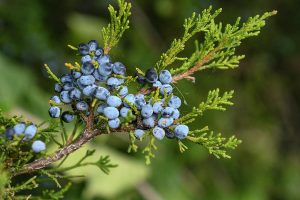
Eastern Red Cedar Berries
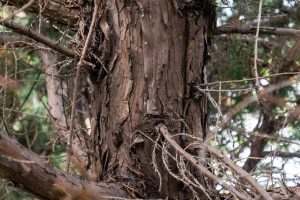
Eastern Red Cedar Bark
References
The post Eastern Red Cedar appeared first on Coniferous Forest.

Eastern Red Cedar
Scientific Classification
| Kingdom | Plantae |
| Clade | Tracheophytes |
| Division | Pinophyta |
| Class | Pinopsida |
| Order | Pinales |
| Family | Cupressaceae |
| Genus | Juniperus |
| Section | Juniperus sect. Sabina |
| Scientific Name | Juniperus virginiana |

Eastern Red Cedar Tree

Eastern Red Cedar Leaf
Quick Information
| Tree Type | Evergreen coniferous |
| Identification | Height: 16-66 ft on average, rarely grows up to 89-90 ft Leaves: Sharp, needle-like juvenile leaves, about 5-10 mm long, andscale-like, tightly pressed adult leaves, about 2-4 mm long Trunk Diameter: 12-39 inches on average, but some specimens can measure up to 67 inches Bark: Reddish-brown, fibrous, peels off in thin strips Cones: Males are 2-3 mm long, 1.5 mm broad; females are dark purple-blue, berry-like, 3-7 mm long Seeds: Wingless Branches: Drooping Crown: Dense, pyramid shaped |
| Distribution | Canada and the eastern United States; from Nova Scotia to Ontario,across the northern Great Plains through eastern Texas, northern Florida and then to the Atlantic coast |
| Habitat | Rocky ridgetops, dry uplands, abandoned farmlands, prairies, grasslands, low mountains, Piedmont regions |
| USDA Hardiness Zone | 2 to 9 |
| Growth Rate | Slow to medium rate, height increases at the rate of 13-24 inches annually |
| Lifespan | Typically 100-300 years, but the oldest red cedar lived for 940 years |
| Growing Conditions | Sunlight: Requires full sun; should get a minimum six hours of unfiltered, direct sunlight Soil: Alkaline, acidic, loamy, sandy, moist, well-drained, clay Water: Moderate rainfall, can withstand sporadic flooding |
| Drought Tolerance | Excellent |
| Diseases & Pests | Diseases include twig and tip blight, cedar-apple rust, and Phytophthora root rot; some common pests are spruce spider mites, juniperscales, and bagworms |
| Reproductive System | Usually dioecious, which means seed and pollen cones appear on separate trees |
| Propagation | Through stem cuttings |
| Wildlife Value | Its foliage provides roosting and nesting site for robins, sparrows, juncos, warblers, and mockingbirds; the twigs and foliage serve as food source for browsers and the fruits are eaten by cedar waxwings |
| Uses | The fine-grained, fragrant heartwood is used for building fence posts, it is in great demand for making closets and chests, ideal for making flatbows, longbows, and sinew-backed bows, juniper essential oil is obtained from the twigs, leaves, and wood, its cones are used a a flavoring agent in gin, it is used as a Christmas tree in the Oklahoma, Arkansas Ozarks, and Missouri |
| IUCN Conservation Status | Its population has been increasing and the species is listed as ‘LeastConcern’ |

Eastern Red Cedar Juniper

Eastern Red Cedar Bonsai
Interesting Facts
- In several places, the eastern red cedar is regarded as an invasive species. Since it does not tolerate fire, it was earlier controlled by occasional forest fires.
- The red cedar originated during the ancient era when aboriginal Americans existed. Fossil evidence has shown that it occurred in large parts of the continent.
- The pollen of eastern red cedar is an allergen, but less potent than that of Ashe juniper. Contact with the red cedar’s wood or leaves can cause mild skin irritations in some people.
Eastern Red Cedar Berries

Eastern Red Cedar Bark
References
- https://www.lakeforest.edu/academic...s-virginiana-(eastern-red-cedar)-cupressaceae
- https://www.arborday.org/trees/treeguide/ TreeDetail.cfm?ItemID=913
- http://www.efloras.org/florataxon.aspx?flora_id=1&taxon_id=210000931
- https://northernwoodlands.org/articles/ article/eastern_redcedar_juniperus_virginiana/
- https://www.iucnredlist.org/species/ 42257/2967510
The post Eastern Red Cedar appeared first on Coniferous Forest.