About 233 minutes
French Art: Classic and Contemporary Painting and Sculpture — Text and Context
Painting Sculpture
53,567 recorded words. 42 minutes difference from this book's estimate.
View Gutenberg source #17244
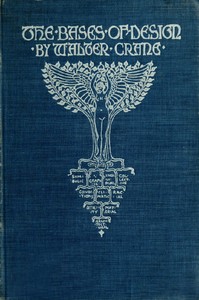
The Bases of Design — Edition Insights can be approached with a clearer sense of reading commitment from its source measurements: 63,226 words, 4 hr 35 min estimated reading time, and 11 detected text sections.
The text analysis averages about 25.2 words per sentence, while the detected sections provide another way to judge how the source is divided.
Project Gutenberg metadata also associates the work with “Decoration and ornament,” connecting these edition facts with the source record’s subject description.
Explore this collection
These alternatives are selected using recorded categories and estimated reading time.
About 233 minutes
Painting Sculpture
53,567 recorded words. 42 minutes difference from this book's estimate.
View Gutenberg source #17244About 195 minutes
Painting Sculpture
44,847 recorded words. 80 minutes difference from this book's estimate.
View Gutenberg source #17395About 368 minutes
Painting Sculpture
84,428 recorded words. 93 minutes difference from this book's estimate.
View Gutenberg source #18383Search stored excerpts and compare books → Choose by your preferences →
Choices use stored catalog measurements. Estimates vary with reading speed. A shared category is a catalog label, not a claim that two books have the same argument or literary quality.
Search reads excerpt text stored with this catalog and links to its associated Gutenberg record. The connection is stored in the site database; this tool does not recheck that every excerpt is word-for-word identical to that external record. Excerpt search does not cover every chapter and does not verify historical publication dates.
Catalog snapshot checked: 2026-09-25. Coverage: 95 public books, 95 available source excerpts.
Read the complete public-domain text at its original source.
Read on Project GutenbergWalter Crane opens The Bases of Design by insisting that the arts of design form a living tree, with each branch sustained by a common root. This metaphor, drawn from his preface, sets the tone for a work that resists the fragmentation he saw in late-Victorian commercial practice. Crane, then director of design at the Manchester Municipal School of Art, addresses his lectures to students but aims beyond the classroom: he wants to restore a sense of fundamental connection among all design disciplines. The book is not a manual of techniques but a plea for imaginative and technical coherence, especially in architecture and decoration.
Crane’s central image—the organic tree—recurs throughout the preface and early chapters. He writes of “the vital veins and nerves of relationship in the arts of design” and warns that specialization, driven by commercial competition, isolates each branch until the whole loses both harmony and purpose. His target is not specialization itself but the mechanical narrowness that follows when a designer forgets the larger stem. Crane draws an analogy between artistic unity and the collective life of a people: just as a tree depends on connected roots, so design depends on shared ground. This ecological view of art is unusual for its time and gives the book a philosophical reach beyond practical instruction.
Crane devotes considerable attention to how racial character, climate, and local materials shape design. He attributes “imaginative faculties” to Celtic origins and “calculating capacities” to Teutonic sources, while calling the Anglo-Saxon mixture especially practical. These generalizations, typical of his era, serve a larger argument: that art becomes “the only history of races.” A scrap of wall-painting or a broken pot becomes an “eloquent book” of a people’s life. Crane illustrates this with the prehistoric hunter scratching animal images on bone and the Assyrian king recording lion hunts on palace slabs. He notes wryly that Assyrian hunts were staged—lions driven into enclosures—but still riskier than a modern pheasant shoot. Such details ground his broad claims in specific, sometimes ironic, observations.
In a striking passage, Crane contrasts the peaceful, distinct art that might have arisen if each people had stayed within its borders with the actual art of conquest and mixture. Ancient Asiatic art, he says, tells “the conqueror’s triumphs, of the strong overcoming the weak.” Yet he does not simply condemn this: the “restless, exploring, conquering, acquisitive spirit” also acts like a storm wind that scatters “the winged seeds of design” to new soils, producing new varieties. This ambivalence—acknowledging both violence and creativity—shows Crane’s willingness to hold competing ideas in tension. He does not resolve the contradiction; instead, he lets it stand as a force that mixes and blends elements originally distinct.
Crane’s lectures were first delivered in 1898 and published that same year, with a second edition in 1902. Readers should approach The Bases of Design as a period document that reveals how a leading designer-artist thought about the unity of art at the turn of the century. The book’s value lies less in its specific racial theories—now dated—than in its insistence that design is never merely technical. Crane’s tree metaphor, his attention to materials and climate, and his frank discussion of conquest as a creative force all reward careful reading. The illustrations, originally charcoal sketches redrawn as pen work, are integral to his argument.
Crane’s insistence that design breathes as a living whole, shaped by soil and century, keeps returning to me whenever I pick up Inside the Classic. Its quieter companion, A theory of pure design — Inside the Classic, feels like a diary of that same conviction—pattern not as ornament but as a pulse. I half-expect to see his pen still moving between the margins.
Use these questions to collect your thoughts before moving on.